
AWeber has upgraded its automation tools, transitioned from Campaigns to the more powerful and flexible Workflows. The best part? This transition was completely seamless. There was no action required on your part. Your existing campaigns were automatically converted to workflows, and gave you immediate access to enhanced capabilities.
So what makes workflows different from campaigns, and how can you take advantage of these new features? Let's explore what you need to know.
What’s the Same?
Just like Campaigns, Workflows allow you to create a linear sequence of emails. This means you can still build and automate a series of messages that your subscribers will receive over time. For example, if you have a welcome series, it can still be structured in a sequence, where one email follows another, just like before.
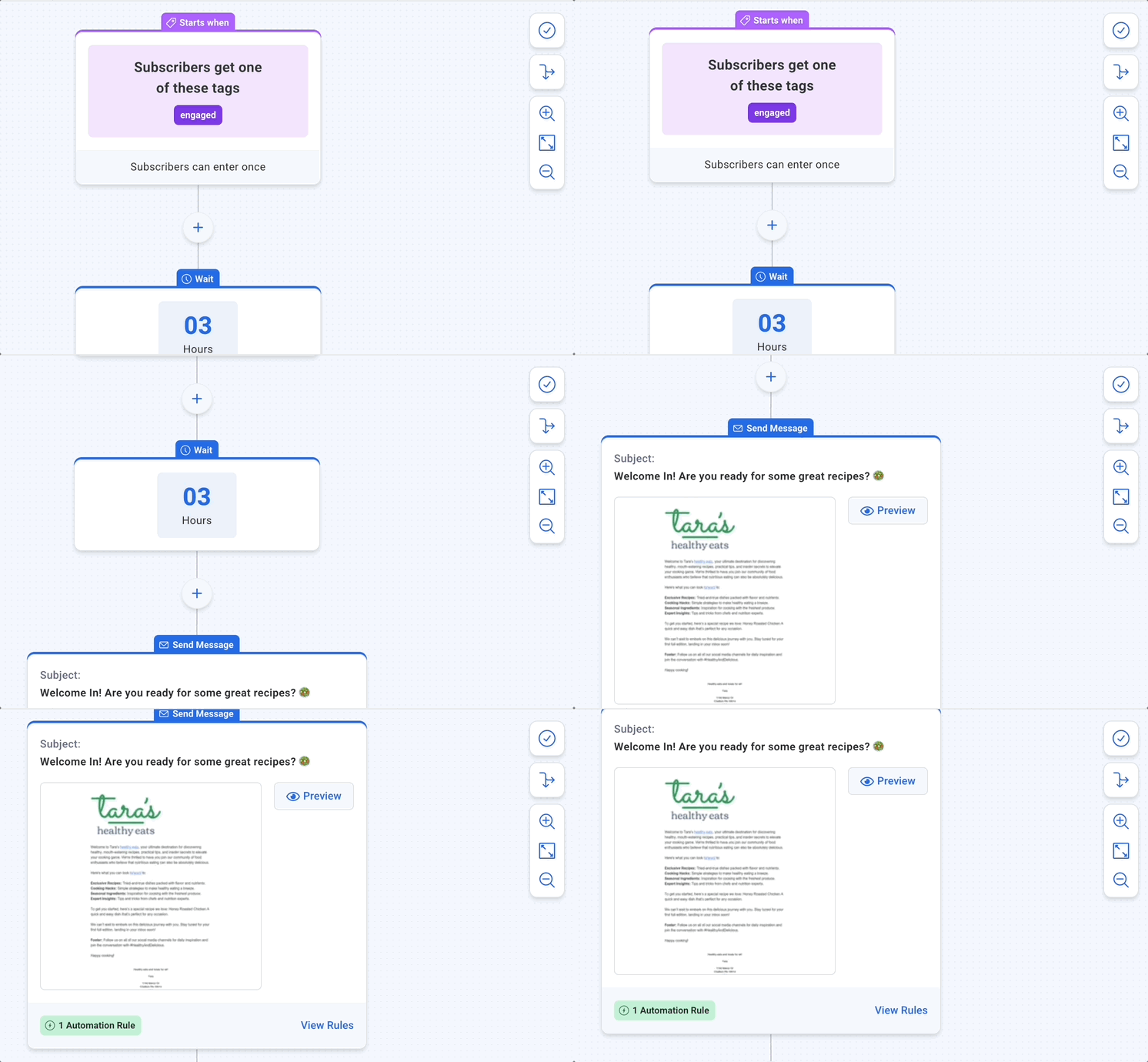
What’s Different?
While the core structure remains the same, Workflows offer several significant advantages over Campaigns. The main difference lies in the added flexibility and functionality that allows for more dynamic, personalized experiences for your subscribers.
1. Split Paths
One of the biggest improvements with Workflows is the ability to create split paths.
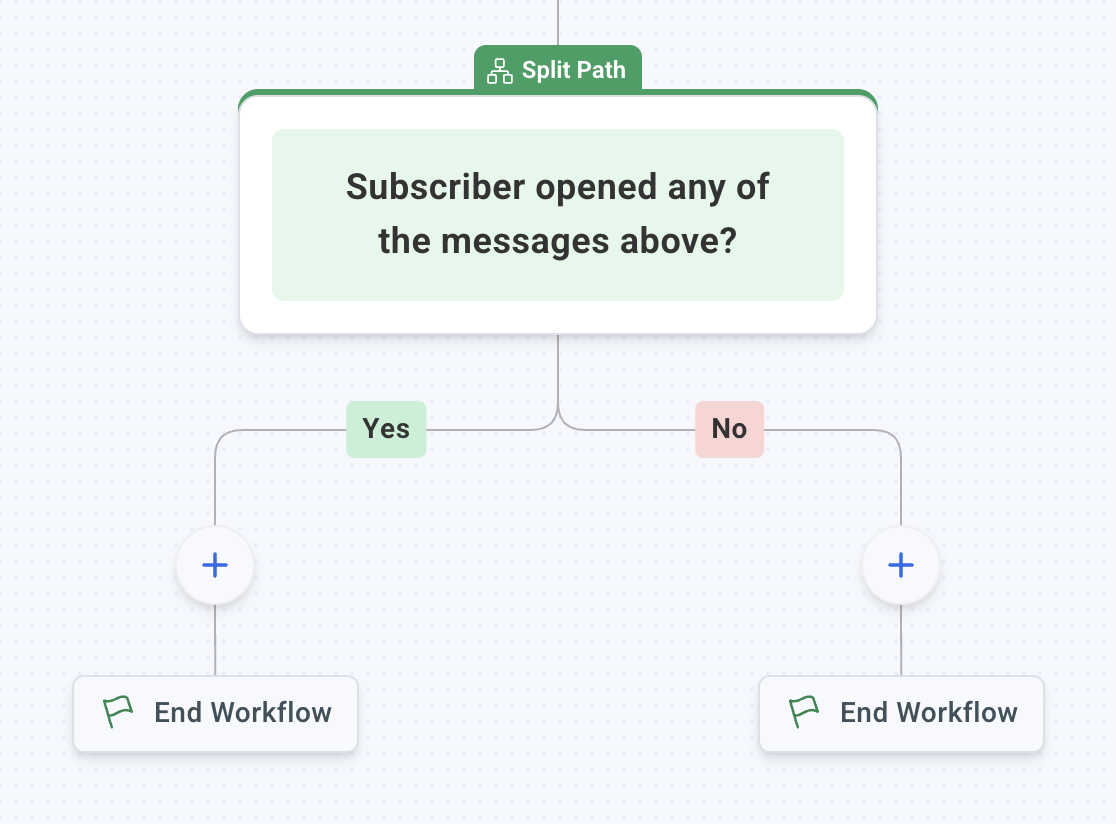
In Campaigns, if you wanted to send different emails based on subscriber actions, you would need to create multiple campaigns and link them together using tags. With Workflows, you can easily manage this in one place by setting up paths based on actions such as email opens or link clicks.
For instance:
-
If a subscriber opens a message, they can be directed to the "Yes" path (e.g., a promotional offer).
-
If a subscriber does not open the message, they can be directed to "No" path (e.g., a reminder or a different incentive).
This means you no longer have to manage multiple campaigns and can create everything within a single, unified workflow. It’s a much cleaner and simpler process.
2. More Control and Customization
Workflows offer more granular control over how your subscribers move through the automation. You can now set up a variety of conditions and actions to customize the experience for each subscriber based on their behavior. This allows for a truly dynamic email marketing strategy that adapts to your subscribers in real time.
3. Simpler, More Intuitive Setup
Setting up a Workflow is easier than ever. The interface makes it intuitive to create and manage sequences, split paths, and set starters for specific actions. This makes your automations far easier to create, test, and iterate upon.
How Did the Transition Happen?
If you were using Campaigns, the good news is you didn’t have to lift a finger. All of your existing Campaigns were seamlessly migrated to Workflows, so you didn’t lose any of your automation data or sequences. AWeber took care of the entire transition process for you, so there was no need to manually rebuild your automations in the new system.
How Can You Get Started with Workflows?
While your old Campaigns were automatically converted to Workflows, it’s a great idea to start exploring the full capabilities of workflows. Here are a few things you can do to get the most out of Workflows:
-
Set up split paths. Start using the split paths feature to create dynamic email flows based on subscriber interactions.
-
Experiment with starters. Use starters like email opens, link clicks, or tag actions to guide subscribers through your workflow.
-
Test and optimize. Workflows make it easy to test different email strategies. Try A/B testing different paths and timing to see what works best for your audience.
AWeber's transition from Campaigns to Workflows provided marketers with a more powerful, flexible, and user-friendly tool for automation. With the added ability to create split paths, manage everything under one roof, and personalize subscriber journeys, Workflows takes your email marketing to the next level.
Take full advantage of these awesome features, and start experimenting with how you can engage your subscribers more effectively today!